What Is Allocated Bourbon? Why Some Bottles Are Almost Impossible to Find
What Is Allocated Bourbon?
Allocated bourbon is any bourbon whose demand consistently exceeds available supply, causing distributors to ration how many bottles each retailer receives. The word allocated refers to the distribution process: rather than a retailer ordering as many cases as they want, a distillery sends only a fixed number of cases to each state's distributor, who then decides which retailers receive bottles and how many. There is no legal definition of the term. It applies informally whenever a bourbon becomes scarce enough that ordinary retail ordering breaks down.
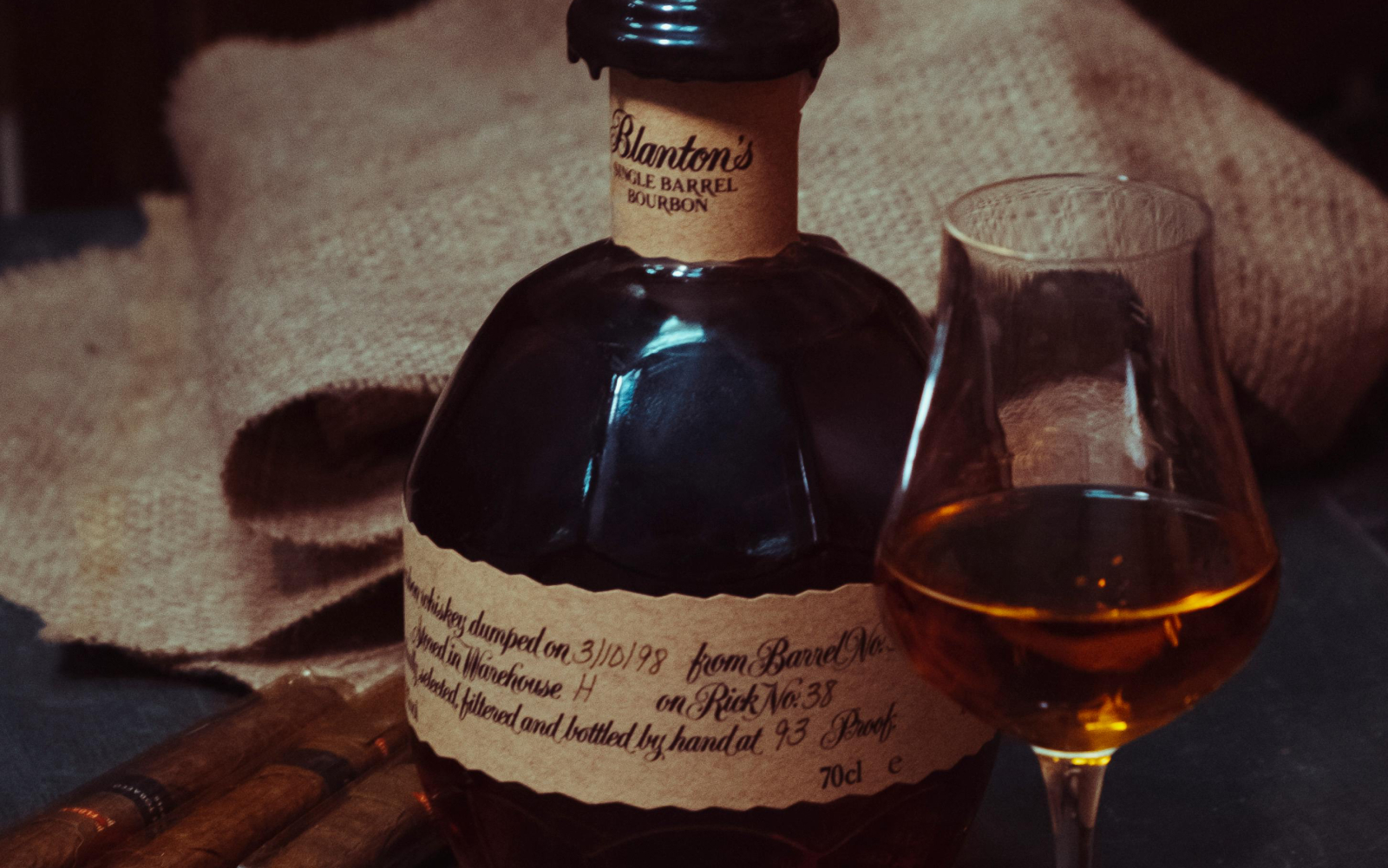
Not all allocated bourbons are expensive or old. Buffalo Trace, a widely respected but modestly priced bourbon, is allocated in many markets because demand has outpaced what the distillery can produce. Blanton's Original Single Barrel, at around $65 MSRP, can be more difficult to find at retail than a bottle of Cognac costing ten times as much. Pappy Van Winkle, the most famous allocated bourbon in America, costs roughly $300 at suggested retail but routinely sells for $2,000 or more on the secondary market when it surfaces at all.
How the Three-Tier System Creates Scarcity
To understand allocation, you need to understand how alcohol moves in the United States. After Prohibition ended in 1933, Congress mandated a three-tier distribution system designed to prevent the monopolistic control of alcohol that had existed before Prohibition. Under this system, producers sell to licensed distributors, distributors sell to licensed retailers, and retailers sell to consumers. Producers cannot sell directly to consumers or retailers in most states. Distributors sit in the middle of every transaction.
This structure means that allocation decisions are primarily made by distributors, not by distilleries. Wine Enthusiast notes that distributors typically decide where and how to send the most desirable bottles they carry, and can use rare bottles as rewards for their best retail customers. A large chain liquor store that moves significant overall volume has more leverage with a distributor than a small independent shop, which is why allocated bottles tend to concentrate at high-volume retailers.
The practical result for consumers is that the distillery has little control over where a bottle ultimately lands. Buffalo Trace can produce a limited quantity of Blanton's and ship it to state distributors, but what happens after that depends on distributor relationships, retailer politics, and often a fair amount of luck.
Why Some Bourbons Become Allocated
Three forces drive allocation, and they often compound each other.
1. The time problem. Bourbon cannot be rushed. A 10-year release requires a barrel filled in 2015 to be bottled in 2025. A 23-year expression requires barrels filled in 2002. Distilleries planning production in those years had to make capacity decisions based on demand forecasts that turned out to be dramatically too conservative. The bourbon boom of the 2000s and 2010s created demand that no distillery had fully anticipated, and the only way to meet it is to wait for barrels filled years ago to mature. There is no shortcut.
2. The demand problem. American bourbon's rise as a globally collected spirit accelerated faster than almost anyone in the industry predicted. International markets, particularly Japan and the United Kingdom, began competing with American consumers for the same limited supply. Collector culture and the secondary resale market created additional pressure: a bottle worth $65 at retail that regularly resells for $300 attracts buyers who have no intention of opening it, which removes bottles from circulation and intensifies the perceived shortage.
3. The strategy problem. Not all scarcity is accidental. Some allocation is partly deliberate. A bourbon available everywhere loses the mystique that makes it desirable. Maintaining limited distribution keeps a brand aspirational in ways that open availability cannot. As InsideHook reported, there is no legal definition of allocation, and the term can mean different things at different distilleries. Some producers genuinely cannot make more. Others could, but choose not to.
What Drives the Secondary Market
The secondary market refers to bottles resold by private individuals, often at prices dramatically above the suggested retail price. A bottle of Pappy Van Winkle 23 with a $300 MSRP may change hands privately for $2,500 or more. George T. Stagg at $100 MSRP regularly appears in secondary listings at $800 to $1,200.
This secondary market exists because the gap between retail price and perceived value is enormous for the most allocated bottles. Someone who wins a retailer lottery for a bottle of William Larue Weller at $90 MSRP holds something worth four or five times that to the right buyer. The temptation to flip is significant, and many retailers have responded with purchase limits, loyalty requirements, and outright bans on known resellers.
It is worth noting that reselling alcohol without a license is technically illegal in most U.S. states. This does not prevent the secondary market from operating at significant scale, but it does mean buyers on secondary platforms have limited legal recourse if they receive counterfeit or tampered bottles.
The Difference Between Allocated and Rare
Allocation and rarity are related but not the same thing. An allocated bourbon is one distributed in limited quantities relative to demand. A rare bourbon is one that is simply scarce, whether due to age, limited production, or the passage of time.
A 20-year single barrel bottled from one cask is genuinely rare: only a few hundred bottles exist and no more will be made. Blanton's, by contrast, is not inherently rare in the sense of being physically scarce at the production level. Buffalo Trace produces meaningful quantities. The scarcity is created and amplified by the distribution system and by demand that outstrips what the distillery can currently ship. The distinction matters because it affects how the scarcity might eventually resolve: truly rare bottles will always be limited, while allocated bottles from high-capacity distilleries could theoretically become more available as production expands to meet demand.
The Most Sought-After Allocated Bourbons
While the list shifts somewhat year to year, certain expressions reliably appear at the top of most enthusiasts' wish lists.
The Buffalo Trace Antique Collection (BTAC) is released each fall and includes George T. Stagg, William Larue Weller, Thomas H. Handy rye, Eagle Rare 17, and Sazerac 18 rye. Each state receives a limited number of cases. Retailers holding even a few bottles hold lotteries that attract hundreds of applicants.
Pappy Van Winkle releases in the same fall window and represents the highest tier of allocation difficulty in mainstream bourbon. The 15, 20, and 23 Year expressions are sought globally. Most retail customers who enter lotteries will not win in a given year.
Blanton's Straight from the Barrel, the barrel proof expression available primarily in Japan and increasingly in the U.S., is rarer than the original single barrel and commands significant secondary market premiums.
Michter's 10 Year, 20 Year, and 25 Year expressions are released in very limited quantities and tend to sell out within hours of retailer announcement.
Why Kentucky Is the Best Place to Find Allocated Bourbon
There is a genuine advantage to visiting the source. Kentucky distilleries are entitled to sell bottles directly from their gift shops under state law, and allocated expressions are sometimes available through distillery-exclusive channels that bypass the three-tier distribution system entirely. A distillery's gift shop may carry bottles that have never appeared on a shelf in any other state.
Beyond the gift shop, the relationships that matter in the allocated bourbon world are concentrated in Kentucky. Louisville's whiskey bars regularly receive allocations that smaller markets never see. Retailers in Bardstown, Frankfort, and Louisville often develop direct relationships with distillery representatives that result in access to bottles that never reach general distribution.
This is one reason destination travelers plan trips specifically around fall release season, when the BTAC and Pappy drops typically occur in October and November. Being present in Louisville during release season, with connections at local retailers and a willingness to enter lotteries across multiple locations, meaningfully improves the odds compared to searching from out of state.
Ready to Hunt Allocated Bourbon in Person?
The best way to experience Kentucky's allocated bourbon culture is to be in Kentucky when it matters. Bourbon Excursions takes small groups to the distilleries where these bottles are made, and our guides know the local retail landscape that surrounds them. If you are planning a bourbon tour in Kentucky, contact us today to start building your trip.

About the Author
Joey Myers

More Posts from the Bourbon Blog