What Is the Smoothest Bourbon to Drink Straight?
What Is the Smoothest Bourbon to Drink Straight?
The smoothest bourbons to drink straight share three measurable traits: a lower bottling proof, a wheated mash bill in place of rye, and enough barrel time to round off the sharp edges without tipping into dry oak. Maker's Mark, Four Roses, Basil Hayden and Eagle Rare 10 Year are the bottles most consistently named when people ask this question, and every one of them lands between 80 and 90 proof. That is not a coincidence. It is the single strongest predictor of how soft a bourbon will feel.
The harder truth is that no bourbon is objectively the smoothest, because smoothness is a sensation produced in your mouth rather than a property sitting in the bottle. What can be explained, and explained precisely, is why some bourbons produce less burn than others. Once you understand the mechanism, you stop guessing at brand lists and start reading labels for the three or four numbers that actually predict the experience.
What "Smooth" Actually Means, and Why Experts Argue About It
Smooth is the most used and least defined word in whiskey. Some people mean the absence of alcohol burn. Others mean a rounded, creamy texture. Others mean a flavor profile with no jagged edges, no bitterness and no aggressive spice. A few use it to mean the bourbon is easy to drink quickly, which most enthusiasts would consider a criticism rather than a compliment.
These are different things, and they do not always travel together. A very light, low proof bourbon can be free of burn while also being thin and forgettable. A rich, complex bourbon at 100 proof can feel silky in texture while still delivering noticeable heat. When a bourbon writer calls something smooth and you disagree entirely, you are usually not wrong. You are measuring a different attribute.
For the purposes of this guide, smooth means the combination most people are actually asking about: low perceived alcohol burn, a soft rather than sharp flavor profile, and enough depth that the pour is worth sipping slowly. That definition is useful because all three components can be traced back to specific production decisions.
Why Bourbon Burns: The Science Behind the Heat
The burn you feel from a strong pour is not a metaphor. It is your nervous system registering a chemical irritant, and researchers identified the exact mechanism more than two decades ago.
Ethanol activates TRPV1, a heat gated ion channel in your sensory neurons. TRPV1 is the same receptor responsible for the burning sensation you get from capsaicin, the compound that makes chili peppers hot. A team publishing in Nature Neuroscience demonstrated that sensory neurons respond to ethanol in a concentration dependent fashion, and that ethanol also lowers the temperature threshold at which TRPV1 activates from roughly 42 degrees Celsius down to roughly 34 degrees Celsius. Normal body temperature sits above that lowered threshold, which is precisely why a mouthful of high proof spirit registers as heat.
Two practical conclusions follow from that. First, alcohol burn is real and physiological, not a failure of your palate or a sign that you have not learned to appreciate whiskey yet. Second, and more usefully, the response is concentration dependent. More ethanol in the glass means more receptor activation and more perceived heat. This is why proof is the most reliable lever available to anyone hunting for a smooth bourbon.
The Five Levers That Determine Smoothness
Every meaningful difference in how soft a bourbon feels traces back to five decisions, four made at the distillery and one made by you at the moment you pour.
Proof: The Lever That Matters Most
Federal law requires bourbon to be bottled at no less than 80 proof, which is 40 percent alcohol by volume. There is no upper limit, and barrel proof releases routinely exceed 120. That range covers an enormous spread in perceived heat.
If you want the softest possible experience, start at the bottom of the range. Four Roses Bourbon and Basil Hayden are both bottled at exactly 80 proof. Maker's Mark and Buffalo Trace sit at 90. Those four bottles feel dramatically gentler than a 101 proof or barrel proof pour, and the difference has almost nothing to do with brand quality.
Basil Hayden is the most instructive case in the category. It uses a high rye mash bill, which normally produces pepper and spice, but it is bottled at the legal minimum proof. The result is a bourbon that tastes distinctly of rye without ever stinging, because there is not enough ethanol behind the spice to drive the receptor response. Proof can override grain character almost entirely. For a full breakdown of how proof and ABV relate, see our guide to what proof bourbon is bottled at.
Mash Bill: Why Wheated Bourbons Feel Softer
Bourbon must contain at least 51 percent corn, but the remaining grain is where distillers build character. According to the Kentucky Distillers' Association, corn adds sweetness, rye adds spice, malted barley adds cereal notes and wheat adds a soft bready component. That single sentence explains most of the smoothness conversation.
Most bourbon uses rye as its secondary grain. Wheated bourbon swaps rye out for wheat entirely, removing the peppery bite and leaving a rounder, sweeter, bread forward profile. The KDA identifies the best known wheaters as Larceny, Maker's Mark, Old Fitzgerald, Pappy Van Winkle and the Weller brands. If someone hands you a bourbon and you find it unusually gentle without being weak, there is a good chance you are drinking a wheater.
This is also why two bourbons at identical proof can feel completely different. A wheated bourbon at 90 proof and a high rye bourbon at 90 proof deliver the same ethanol load to your TRPV1 receptors, but the rye version layers spice on top of that heat, and your brain reads the combination as sharper. Our post on the grains used to make bourbon covers how each one shapes the final spirit.
Age: The Sweet Spot Is Narrower Than You Think
Time in the barrel does two things at once. Harsh volatile compounds from distillation slowly dissipate, and the charred oak contributes vanillin, caramelized sugars and tannin. The first process reduces roughness. The second adds the depth that separates a smooth bourbon from a merely inoffensive one.
Most drinkers find the sweet spot somewhere between six and twelve years. Eagle Rare 10 Year and Knob Creek 12 Year are frequently cited exactly because they sit in that window. Below four years, a bourbon often still carries a raw grain edge. Past roughly fifteen years, Kentucky's temperature swings can push a barrel into dry, bitter, over oaked territory, which is why very old American whiskey is a genuine risk rather than a guaranteed upgrade. We go deeper on this in our guide to how long bourbon ages.
Age is also not a substitute for proof. Knob Creek 12 Year is twelve years old and bottled at 100 proof. It is genuinely smooth for its strength, but it is not smoother than an 80 proof bourbon half its age. It is smoother than you would expect at 100 proof, which is a different claim.
The Smoothest Bourbons to Drink Straight, Category by Category
What follows is editorial consensus rather than measurement. Smoothness cannot be tested in a laboratory the way proof or age can, so treat these as informed starting points rather than verdicts. Proofs are for standard bottlings and vary by batch and market.
Smoothest overall for beginners: Maker's Mark, 90 proof. Red winter wheat in place of rye, a moderate proof and wide availability. Soft caramel, vanilla and baking spice with no peppery finish to trip over.
Smoothest at the lowest proof: Four Roses Bourbon, 80 proof. Bottled at the legal minimum, blended from ten separate recipes. Honey and vanilla with a touch of orchard fruit. Very hard to find anything gentler that still tastes like bourbon.
Smoothest with real depth: Eagle Rare 10 Year, 90 proof. A decade of aging at a gentle proof is close to the ideal formula. You get barrel complexity without paying for it in heat.
Smoothest high rye option: Basil Hayden, 80 proof. Proof does the smoothing while the rye supplies interest. A good choice if you find pure wheaters too sweet.
Smoothest rich and dessert leaning: Woodford Reserve Double Oaked, 90.4 proof. A second maturation in deeply toasted, lightly charred barrels pushes caramel and toffee forward without adding harshness.
Smoothest at 100 proof: Knob Creek 12 Year. Twelve years of oak carries a full 100 proof better than almost anything else at the price. Smooth with punch behind it rather than smooth instead of punch.
Smoothest cask finished: Angel's Envy Port Finish, 86.6 proof. Port barrel finishing layers ripe cherry and plum over the base spirit. Decadent and gentle at the same time.
Find Your Smoothest Bourbon
Answer four questions about how you actually like to drink and the tool below will rank a shortlist for you, weighting proof, mash bill, body and budget together rather than handing you the same generic top ten everyone else publishes.
How to Drink Bourbon Straight Without the Burn
Technique changes the experience more than most people expect, and it costs nothing.
Pour a small measure, around an ounce, into a glass that tapers at the top. Let it sit for five minutes before the first sip so the most volatile alcohol vapor can escape. Diving straight into a freshly poured glass sends a concentrated blast of ethanol vapor up your nose, which primes you to expect heat before the liquid ever reaches your tongue.
When you nose it, keep your mouth slightly open and do not inhale sharply. Take a small first sip and move it across your whole palate rather than swallowing immediately. The first sip of any bourbon reads hotter than the second and third, because your receptors adjust. Judging a bourbon on the first sip alone is the single most common mistake new drinkers make. Our guide to drinking bourbon neat, on the rocks and with a splash walks through each serving style in detail.
The Water Trick: Why a Few Drops Change Everything
Adding a small amount of water to bourbon is the fastest way to make almost any pour feel smoother, and there is real chemistry behind why it works rather than simple dilution.
Researchers publishing in Scientific Reports modeled how flavor carrying molecules behave in water and ethanol mixtures. They found that guaiacol, a representative flavor compound, sits preferentially at the liquid and air interface in mixtures containing up to about 45 percent ethanol, and that at 59 percent ethanol and above it gets pulled down into the bulk of the liquid instead. Because you taste and smell the surface of the liquid first, lowering the alcohol concentration pushes more aroma compounds up to where you can actually perceive them.
The practical version is simple. Add two or three drops of room temperature water, swirl, and wait thirty seconds. You are lowering the ethanol concentration that drives your TRPV1 response while simultaneously bringing flavor compounds to the surface. Less burn and more aroma from the same pour. Start with very little, because you can always add more and you cannot take it back out.
Ice works differently and involves a genuine tradeoff. Chilling numbs your palate and mutes aromatics along with the burn, so you get a gentler experience at the cost of some of the flavor you paid for. There is nothing wrong with that if it is what you enjoy, but it is a different choice than adding water.
Common Questions About Smooth Bourbon
Is expensive bourbon smoother than cheap bourbon? Not reliably. Price tracks scarcity, age statements and marketing at least as much as it tracks drinkability. Maker's Mark and Four Roses are among the softest bourbons available and both sit on the everyday shelf, while plenty of allocated bottles are high proof and deliberately intense.
Does smoother mean lower quality? No, though the words get tangled together because some very light, thin bourbons are marketed as smooth. Softness and complexity are independent. Eagle Rare 10 Year is both.
Is wheated bourbon always smoother than high rye? Usually, at comparable proof. But proof outranks mash bill. An 80 proof high rye bourbon will feel gentler than a 120 proof wheater almost every time.
What is the smoothest bourbon for a total beginner? A wheated bourbon at 90 proof or below is the safest starting point, which in practice usually means Maker's Mark. If you find it too sweet, move to Four Roses or Basil Hayden rather than jumping straight to something stronger.
Does letting bourbon breathe make it smoother? A few minutes in the glass genuinely helps by letting the harshest vapor escape. Long exposure does not continue improving it, and an open bottle stored for years will slowly oxidize and flatten.
Ready to Taste the Difference for Yourself?
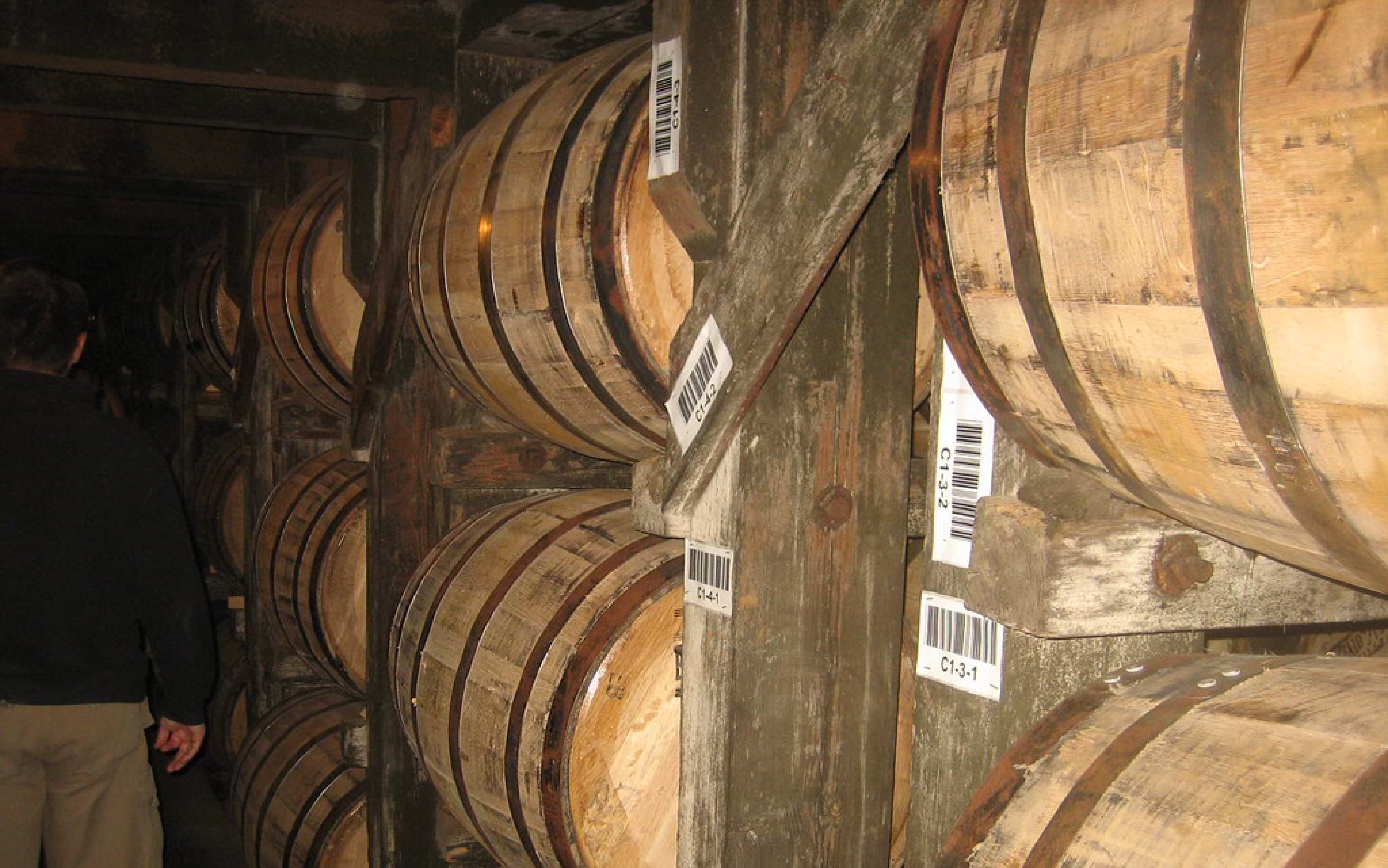
Reading about the gap between a wheated 90 proof pour and a barrel proof high rye is one thing. Tasting them back to back, twenty minutes apart, in the rickhouse where both were aged is what makes the distinction permanent. Every guest we take out asks some version of the smoothest bourbon question, and the answer always lands better in a glass than on a page. Bourbon Excursions runs small group tours to the Kentucky distilleries behind most of the bottles named above, with a guide who can explain exactly why one pour softens and the next one bites. If you are planning a bourbon tour in Kentucky, contact us today to start building your trip.

About the Author
Joey Myers

More Posts from the Bourbon Blog