What Is Bourbon Neat, On the Rocks, and With a Splash?
What Is Bourbon Neat?
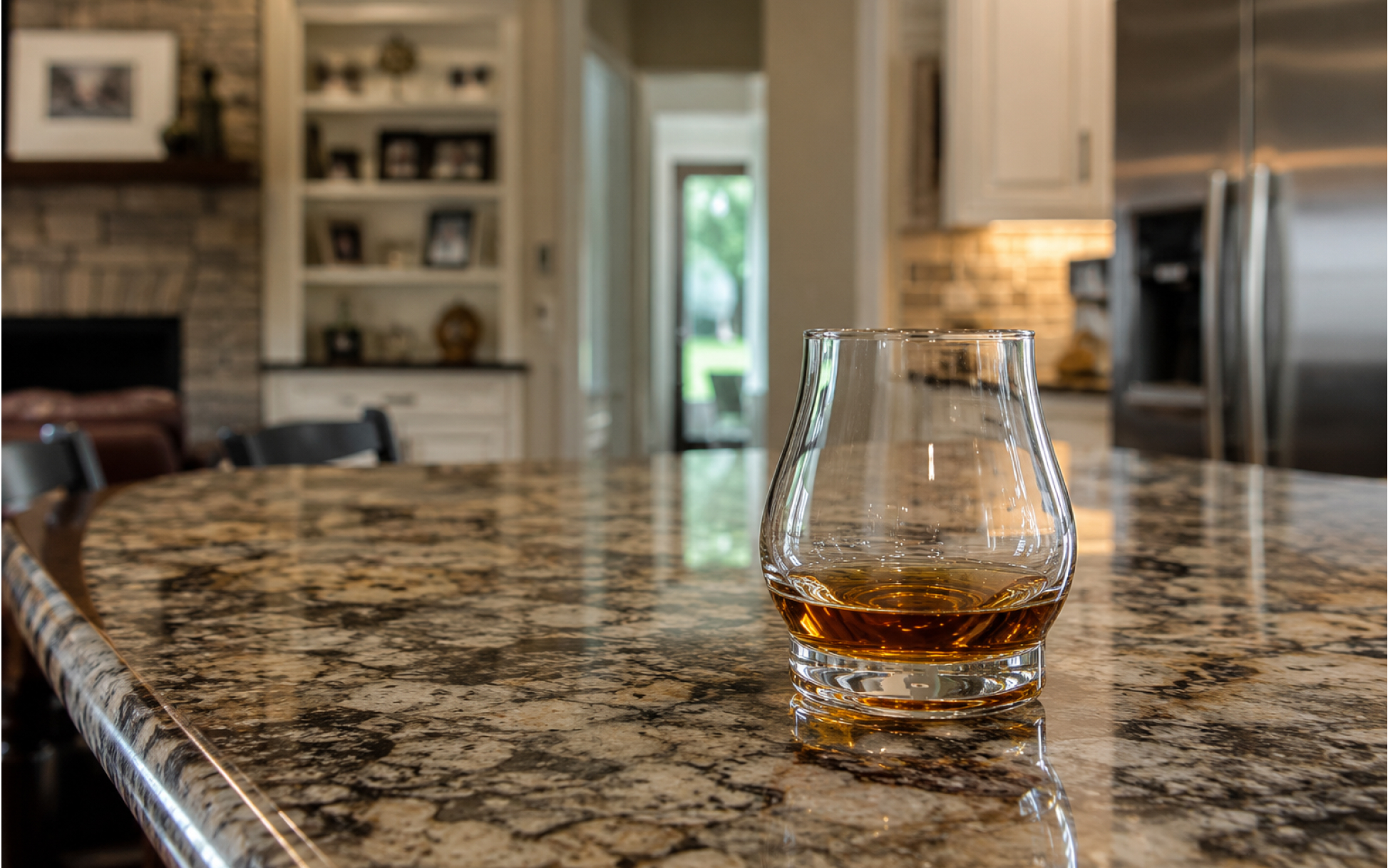
Bourbon neat means poured into a glass at room temperature with no ice, no water, and no additions of any kind. The word neat is bartender shorthand for the spirit exactly as it comes from the bottle: full proof, room temperature, undiluted. It is not the same as straight, which is a legal production designation referring to bourbon aged at least two years, and it is not the same as up, which means chilled and strained without ice. Neat is simply the bourbon in a glass, nothing else.
When you order bourbon neat at a bar, you receive the spirit poured directly from the bottle into a rocks glass or Glencairn glass, served without ice or mixer. The flavor you taste is the complete expression of what the distiller created, unmodified by dilution, temperature change, or added ingredients.
What Is Bourbon On the Rocks?
On the rocks means served over ice. The phrase comes from the old bar trade slang for ice cubes. When bourbon is poured over ice, two things happen simultaneously: the temperature drops and the bourbon begins to dilute as the ice melts. Both effects change the drinking experience in meaningful ways.
Cold temperature suppresses the perception of alcohol heat, which makes high-proof bourbons more approachable and reduces the burning sensation on the palate. It also slows evaporation, which means fewer volatile aromatic compounds reach the nose. The trade-off is a smoother, more forgiving sip alongside a slightly muted aroma profile.
Dilution from melting ice opens certain flavor compounds that are suppressed at full proof while washing out others. The net effect depends on the bourbon: some expressions become noticeably more expressive with slight dilution, while others become thinner and less interesting. The ice format matters significantly. A single large cube or sphere melts slowly and allows the drink to evolve over 10 to 15 minutes. Multiple small cubes or crushed ice dilute very quickly and can water down a drink before you finish it.
What Does Bourbon With a Splash Mean?
With a splash means adding a small amount of still water to the bourbon, typically three to five drops rather than a true splash of liquid. The instruction is counterintuitive but well supported by chemistry: a small addition of water releases aromatic compounds that were bound to ethanol molecules at full proof and makes them accessible to the nose.
The research behind this practice is specific. Chemists Bjorn Karlsson and Ran Friedman published findings in Scientific Reports demonstrating that guaiacol, a smoky aromatic compound produced during barrel charring, migrates to the surface of a whiskey when water is added, where it becomes far more accessible to the nose. The same mechanism works across other aromatic compounds in the spirit. The result is that the aroma of a bourbon with a few drops of water is often richer and more complete than the same bourbon at full proof, even though the liquid volume change is barely perceptible.
The practical application is straightforward. Add water three to five drops at a time using a dropper, a small pipette, or simply a dipped finger. Swirl gently after each addition and nose the glass again. The aroma will change noticeably between additions. Stop when the aroma peaks. For barrel proof and cask strength bourbons above 110 proof, water addition is not optional for getting the most out of the glass. The proof at those levels actively suppresses aromatic compound perception, and water is the corrective.
Straight vs. Neat: A Common Confusion
These two terms are often used interchangeably but they refer to entirely different things.
Neat is a serving term. It describes how a drink is prepared: no ice, no mixers, room temperature, poured directly from the bottle.
Straight is a legal production term. Straight bourbon whiskey is bourbon that has been aged for at least two years in new charred oak containers, with no added coloring, flavoring, or blending material. A bourbon can be straight and served on the rocks. A bourbon can be served neat without being a straight bourbon if it is under two years old.
When someone says they drink their bourbon straight, they typically mean neat. But the word itself has a specific regulatory meaning that has nothing to do with how you serve it.
Choosing the Right Glass
Glassware matters more than most casual drinkers realize, not for aesthetic reasons but for functional ones. The shape of the glass directly affects how aromas reach the nose, which shapes the entire tasting experience before the liquid touches the palate.
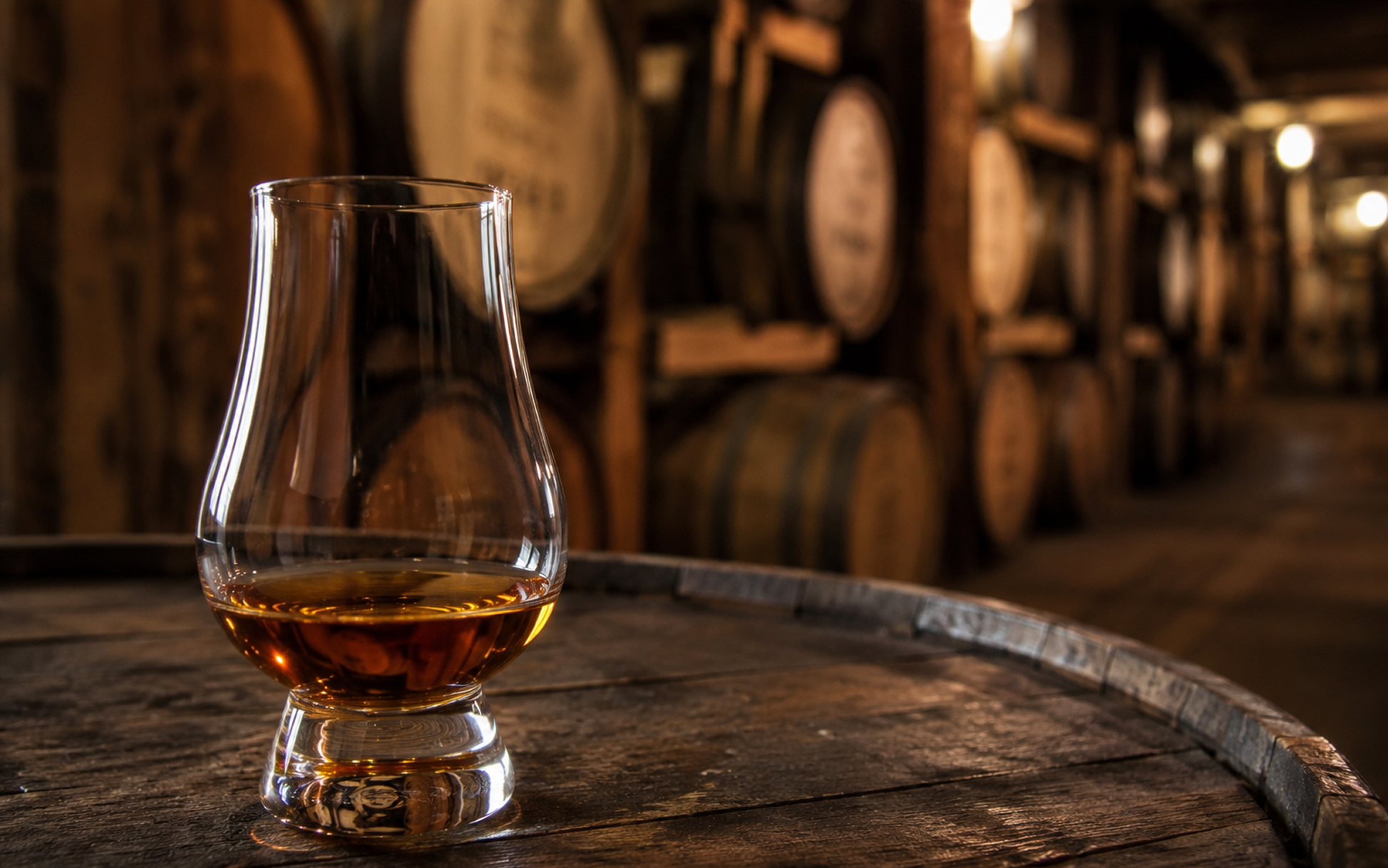
The Glencairn glass is the most widely recommended glass for neat bourbon and with-a-splash bourbon. Its wide bowl allows the spirit to breathe and release aromatic compounds, while its tapered rim concentrates those compounds at the opening. The result is that you smell more bourbon more easily than you do from a wide, straight-sided glass. Major distilleries use Glencairn glasses in their tasting rooms because guides want visitors to access the full aromatic profile of each expression.
The rocks glass, also called a lowball or old fashioned glass, is the standard choice for bourbon on the rocks and for Old Fashioned cocktails. Its wide, straight-sided design accommodates ice comfortably and allows easy sipping. It does not concentrate aromatics the way a Glencairn does, but that is less important when ice and dilution are already altering the aromatic profile.
A shot glass is not a bourbon glass. It is designed for rapid consumption and provides essentially no aromatic surface area. Drinking a quality bourbon from a shot glass is the functional equivalent of tasting a fine meal while holding your nose.
Does Temperature Matter?
Yes, and more than most drinkers appreciate. Temperature directly affects which volatile compounds evaporate from the liquid and reach the nose, and it affects how the alcohol heat registers on the palate.
Room temperature bourbon, around 65 to 70 degrees Fahrenheit, allows the full range of volatile aromatic compounds to evaporate naturally. Warming hands on the glass during tasting further increases evaporation and can reveal additional aromatic layers. This is why experienced tasters will cup the glass in both hands for a few minutes before nosing.
Chilled bourbon suppresses volatile evaporation, which reduces the aromatic intensity but also reduces the perception of ethanol heat. For high-proof expressions where the alcohol feels harsh at room temperature, a slight chill can make the bourbon more approachable without eliminating all the flavor.
Frozen bourbon, which some drinkers prefer and which is common in some European traditions, suppresses nearly all aromatic evaporation and dramatically reduces flavor complexity. It is a valid personal preference, but it is not a format that reveals what a quality bourbon offers.
Which Serving Style Is Best for You?
The honest answer is that it depends on the bourbon and on your current preference. A few guidelines help match the serving style to the situation.
Neat is best for premium, complex, or unfamiliar bourbons where you want to understand the full expression before modifying it. It is also best for any bourbon you are tasting for the first time, since it is the baseline from which all other serving styles depart.
On the rocks is best for high-rye or barrel proof expressions where the ethanol heat at room temperature is uncomfortable, or simply when you want a cold, slowly evolving drink. It is also the most social format, suited to longer conversations where the drink should last.
With a splash is best for any barrel proof or cask strength expression above 110 proof, and genuinely recommended for any expression where you want to maximize the aromatic experience. It requires more attention than neat or on the rocks but reliably produces a richer sensory result.
In a cocktail is best for everyday and balanced expressions where the bourbon's job is to anchor the drink rather than be the singular focus of attention. The Old Fashioned, Manhattan, and Whiskey Sour are all formats where a good 90 to 100 proof bourbon performs better than either a delicate premium expression or a raw barrel proof one.
Experiencing All Four at the Source
Kentucky distillery tasting rooms often present bourbon in multiple serving formats during the same visit, giving guests a direct comparison of how the same spirit changes when neat, with water added, or slightly diluted. A guide who draws a sample directly from a barrel and pours it into a Glencairn at full barrel proof, then adds a few drops of water and asks you to nose it again, is demonstrating chemistry in real time in a way that no written explanation fully captures.
Ready to Find Your Preferred Style in Person?
The best way to discover how you prefer your bourbon is to try the same expression multiple ways in a setting where someone can explain what is changing and why. Bourbon Excursions takes small groups to Kentucky's finest distilleries, where those conversations happen at the tasting bar with every pour. If you are planning a bourbon tour in Kentucky, contact us today to start building your trip.

About the Author
Joey Myers

More Posts from the Bourbon Blog