
What Is Bottled-in-Bond Bourbon? The Forgotten Federal Standard
What Is Bonded Bourbon?
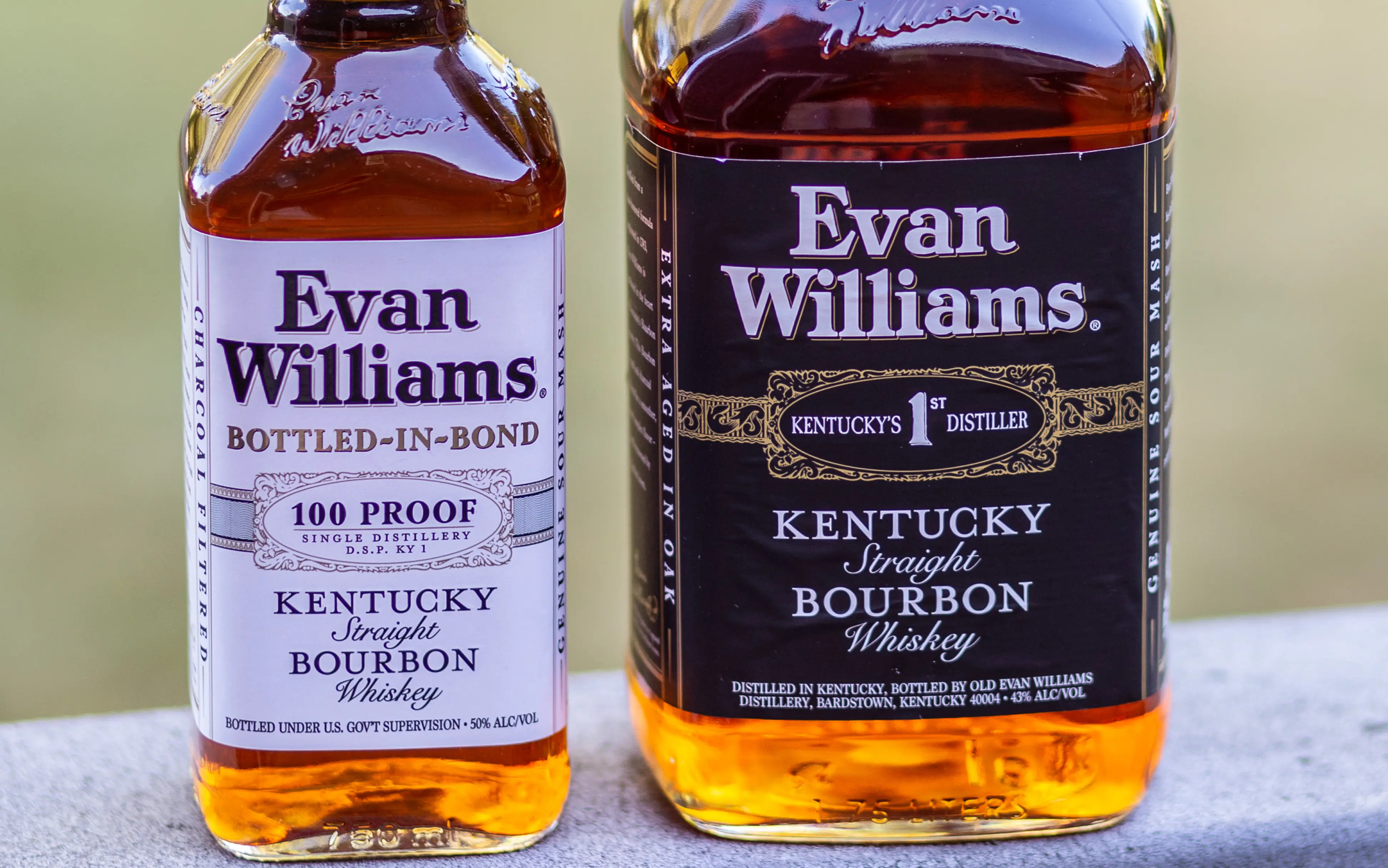
Bonded bourbon, also called bottled-in-bond, is bourbon that meets four specific legal requirements established by the Bottled-in-Bond Act of 1897: it must be produced by one distiller at one distillery during a single distilling season, aged for a minimum of four years in a federally bonded warehouse under government supervision, and bottled at exactly 100 proof. No coloring, flavoring, or additives are permitted. It is the most rigorously defined designation in American whiskey, and the only one where the federal government sets every production parameter by law.
The Problem That Created the Law
To understand why bottled-in-bond matters, you have to understand what American whiskey looked like in the decades before 1897. The short answer is: it was largely fraudulent.
Before sealed bottles became standard practice, whiskey was commonly shipped in barrels to saloons, general stores, and pharmacies, where proprietors would bottle and sell it themselves. The period between the distillery and the consumer's glass was largely unregulated and unverifiable. What the customer received was frequently not what the label claimed.
According to historical accounts cited by bourbon historian Fred Minnick, Congress studied the issue and found that only around half of what was being sold as bourbon in the mid-to-late 1800s was genuine bourbon. The rest was grain neutral spirit - essentially vodka - colored and flavored with tobacco, iodine, prune juice, turpentine, and in some cases more dangerous adulterants. Books were written on how to imitate bourbon convincingly. Counterfeit whiskey was not a fringe problem. It was the industry norm.
The situation was particularly damaging for Kentucky's legitimate straight whiskey producers, who were competing against cheaper counterfeit products that mimicked their products' appearance at a fraction of the production cost.
The Fight for the Act: E.H. Taylor Jr. and the Straight Whiskey Producers
The campaign to establish legal quality standards for American whiskey was led by Colonel Edmund Haynes Taylor Jr., the founder of the Old Taylor distillery and one of the most influential figures in bourbon history. Taylor, along with other straight whiskey producers, partnered with Secretary of the Treasury John G. Carlisle to push the legislation through Congress.
The opposition came from rectifiers - companies that blended and redistilled purchased spirit, often adding non-whiskey ingredients before bottling under whiskey labels. The battle between the straight whiskey camp and the rectifiers was one of the defining commercial conflicts in American spirits history, playing out over decades and continuing through the debates around the 1906 Pure Food and Drug Act and ultimately President Taft's 1909 ruling on how whiskey could be labeled.
The Bottled-in-Bond Act was signed into law on March 3, 1897, by President Grover Cleveland. It is widely considered the first federal consumer protection act in United States history.
The Four Requirements
Under 27 CFR § 5.143, to legally carry the bottled-in-bond designation, a bourbon must meet all four of the following requirements without exception.
One distillery, one distiller. The entire contents of the bottle must originate from a single distillery, produced by one distiller. Blending with product from other facilities or other producers is not permitted. This requirement guarantees that the label's stated producer is genuinely responsible for what is in the bottle.
One distilling season. All of the spirit must come from a single distilling season - either January through June or July through December of the same calendar year. No cross-season blending is allowed. This means each bonded release is a snapshot of a specific period of production, not an averaged blend of multiple years.
Aged at least four years in a federally bonded warehouse. The whiskey must age for a minimum of four years in a warehouse under U.S. government supervision. Standard bourbon requires no minimum aging, and straight bourbon requires only two years. The bonded four-year floor, with government oversight throughout, was the key quality guarantee the 1897 Act was designed to provide.
Bottled at exactly 100 proof. The spirit must be bottled at precisely 100 proof (50% ABV) - no more, no less. No caramel coloring, no added flavoring, no sweeteners. Water to reach proof is the only permitted addition. This is the only fixed bottling proof in American bourbon law.
The Green Stamp and Government Oversight
In its original form, the Bottled-in-Bond Act required a green government stamp affixed over the cork of every compliant bottle. The stamp certified the distilling season, the date of bottling, the proof, and the name and district of the distiller. Treasury agents were assigned to control physical access to bonded warehouses, ensuring that what went in matched what came out.
The green stamp is long gone, replaced by the distiller's own label declaration. But the legal requirements remain intact and are enforced by the Alcohol and Tobacco Tax and Trade Bureau. A bottle carrying the bonded designation today is subject to the same verification requirements as a bottle in 1901, just without the physical government seal.
Why Bonded Bourbon Fell Out of Fashion
After Prohibition decimated the bourbon industry, bonded bourbon lost much of its practical significance. The adulteration problem the 1897 Act was designed to solve had been largely eliminated by more comprehensive post-Prohibition federal regulation. The once-meaningful green stamp became a marketing artifact. For most of the mid-to-late twentieth century, bonded bourbons were considered old-fashioned - bottom-shelf workhorses bought for price rather than prestige.
Evan Williams Bottled-in-Bond and Old Forester 100 Proof were both considered budget options for most of their histories, despite being genuine bonded products that met every legal requirement. The designation had become a shorthand for "cheap" rather than "certified."
The Bonded Revival
The bourbon renaissance of the 2000s and 2010s brought bottled-in-bond back into serious consideration. As enthusiasts began scrutinizing labels more carefully and as craft distilleries began emphasizing transparency and traceability as values, the bonded designation started to look less like a relic and more like a feature.
In an era of sourced bourbon, non-disclosure agreements, and vague production claims, a bonded label offers something genuinely rare: a legal guarantee of exactly where the bourbon was made, when it was made, how long it aged, and what proof it was bottled at. No other mainstream designation provides that level of verified, government-backed information in a single claim.
Henry McKenna 10 Year Bottled-in-Bond won the San Francisco World Spirits Competition's Best in Show award in 2019 - a result that reintroduced many bourbon drinkers to the category. E.H. Taylor Small Batch Bottled-in-Bond, named in honor of the man who fought for the 1897 Act, has become a benchmark expression. The designation is experiencing a genuine critical and commercial rehabilitation.
Bonded Bourbon at the Distillery
When you visit a Kentucky distillery, bonded bourbon offers a specific kind of tasting room story. The 100 proof bottling strength gives it noticeably more presence than an 80 proof standard release. The four-year minimum aging means it carries genuine barrel character. And the single-season, single-distillery provenance means that what you are tasting is a precise expression of one distillery's work during one specific period of time.
Understanding the Bottled-in-Bond Act - and the adulteration crisis that made it necessary - transforms a glass of bonded bourbon from a technical designation into a piece of American history. Every pour carries the legacy of the distillers who fought to define what genuine bourbon was, at a time when the answer was far from obvious.
Ready to Experience Bonded Bourbon in Person?
The best way to understand what a bottled-in-bond designation means is to taste one on the distillery floor where it was made. Bourbon Excursions takes small groups to Kentucky's best distilleries - including those producing bonded expressions with genuine historical roots. If you're interested in planning a bourbon tour in Kentucky, we'd love to help you build the right trip. Contact us today to start planning your experience.

About the Author
Joey Myers

More Posts from the Bourbon Blog

