
How Long Does Bourbon Age? Aging, Oak, and What It Means for Flavor
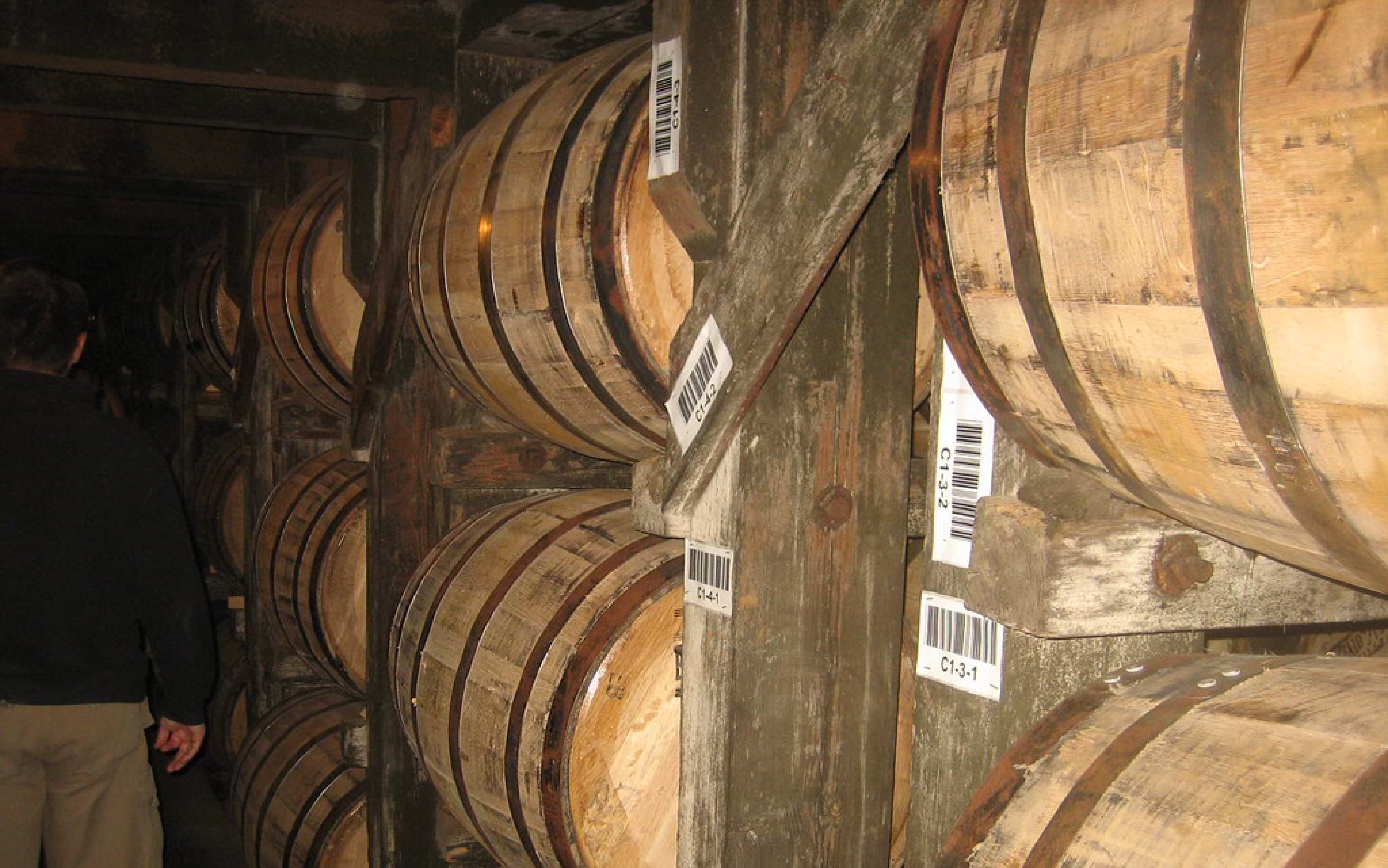
How Long Does Bourbon Age?
Bourbon has no maximum aging requirement and no single correct answer to this question. The minimum for straight bourbon is two years. Most premium Kentucky releases age between four and twelve years. A small number of exceptional expressions age fifteen years or longer. How long any given barrel should age depends on the mash bill, the char level, where the barrel sat in the rick house, and the specific seasonal conditions it experienced - none of which are predictable in advance with precision. The master distiller tastes each barrel and decides when it has reached its peak.
What the Law Actually Requires
Under 27 CFR § 5.143, bourbon itself has no minimum aging requirement. A bourbon can technically be bottled the day after it enters the barrel. However, the more commonly seen designation on labels is "Straight Bourbon," which requires a minimum of two years in new charred oak. Any bourbon aged less than four years must carry an age statement on the label. Any bourbon aged four years or more may omit the age statement entirely, which is why most everyday bottles do not carry one.
The bottled-in-bond designation requires a minimum of four years. Beyond that, aging length is entirely at the discretion of the distillery.
Why Bourbon Stops Aging in the Bottle
Aging is a relationship between the spirit and the wood. Once bourbon leaves the barrel and enters the bottle, that relationship ends. The flavor is locked in permanently. A bottle of 12-year-old bourbon kept on a shelf for another decade does not become a 22-year-old bourbon. It remains exactly what it was at bottling, possibly losing a small amount of intensity if the seal is imperfect, but fundamentally unchanged.
This is an important distinction from wine, which continues to evolve in the bottle. Bourbon does not. The age statement on a label refers to the time the spirit spent in the barrel, and that number is fixed the moment the barrel is emptied.
What Actually Happens Inside the Barrel
A newly filled bourbon barrel holds a clear, high-proof spirit that tastes primarily of grain and raw distillate. There is no color, no vanilla, no caramel - those characteristics have not yet been created. Everything that makes mature bourbon taste the way it does is produced during the barrel aging process through three overlapping mechanisms.
Extraction. The spirit draws flavor compounds directly from the charred oak: vanillin (vanilla), caramelized hemicellulose (caramel, toffee), tannins (dryness, structure), and lactones (coconut, wood). The char layer acts as both a flavoring agent and a filter, removing some of the harsher congeners from the raw distillate.
Evaporation. Each year, roughly 3 to 5% of the barrel's volume evaporates through the wood and escapes as vapor - the portion known as the Angel's Share. This evaporation concentrates the remaining spirit, intensifying its flavor as the years pass. In Kentucky's relatively warm, dry climate, more water evaporates than alcohol, which means the proof of the barrel typically rises during aging. A barrel entered at 115 proof may emerge at 120, 125, or higher after a decade in the warehouse.
Seasonal cycling. Kentucky's dramatic seasonal temperature swings are the most important variable in bourbon aging. Summer heat expands the spirit, pushing it deep into the wood's pores and increasing extraction. Winter cold contracts it, pulling the spirit back toward the center of the barrel. This cycling repeats every year, and each cycle drives another round of extraction and integration. According to Distillery Trail, one year of aging in Kentucky is estimated to produce roughly three years' worth of maturation compared to Scotland's cooler climate.
The Angel's Share: Why Older Bourbon Costs More
The Angel's Share is the name given to the portion of bourbon lost to evaporation during aging. In Kentucky, this averages approximately 3 to 5% of the barrel's volume per year. The compounding effect of this annual loss is dramatic: a standard 53-gallon barrel entered at four years may yield around 45 gallons at bottling. The same barrel at twelve years may yield only 28 to 32 gallons. By twenty years, the barrel may hold fewer than 15 gallons of the original 53.
This evaporation loss is the primary reason older bourbon costs more. There is simply less of it. A 20-year-old bourbon represents twenty years of warehouse space, twenty years of barrel investment, and roughly 70% of the original volume surrendered to the atmosphere. The remaining 30% has to cover all of those costs and then some.
Rick House Position: Why Location Matters
The same barrel aged at the top of a nine-story Kentucky rick house experiences significantly different conditions than an identical barrel on the ground floor. Upper floors are hotter in summer, colder in winter, and drier year-round. The more extreme the temperature swings, the faster the extraction and the more dramatic the seasonal cycling. Upper-floor bourbon typically matures faster and produces bolder, more intense flavor. Lower-floor bourbon ages more slowly and gently, with a more integrated, softer profile over the same number of years.
This is why Kentucky distilleries often rotate barrels during aging - moving them between floors to achieve consistent flavor across a large bottling. It is also why single barrel expressions from the same distillery can taste markedly different from one another: the "rickhouse location" printed on many single barrel labels tells you something meaningful about the conditions that shaped the spirit.
How Age Affects Flavor
Young bourbon (2 to 4 years) is grain-forward, sometimes raw, with vanilla and caramel just beginning to emerge from the wood. The alcohol can feel sharp and unintegrated. Many craft distilleries bottle at this age for cash flow reasons, and the best of them are genuinely enjoyable - but they are a different experience from aged bourbon.
Mid-range bourbon (4 to 8 years) is where most of the world's best everyday drinking bourbon lives. The mash bill's grain character has integrated with the wood's vanilla and caramel. The finish lengthens as tannins develop. The spirit has cycled through the wood enough times to build real complexity. This is the range where value peaks for most drinkers.
Older bourbon (10 to 15 years) shifts the balance further toward the oak. Tannins become more assertive. Dried fruit and spice notes emerge as secondary flavor compounds develop over extended aging. The best expressions in this range are extraordinarily complex - but not all barrels improve with extended aging, and some become over-oaked or bitter if left too long.
Very old bourbon (15 years and above) is genuinely rare and unpredictable. George T. Stagg, William Larue Weller, and Pappy Van Winkle represent the upper tier of what Kentucky's climate can produce in extended aging. At these ages, the master distiller's barrel selection skill is the primary determinant of quality: the barrels that survive this long in excellent condition are exceptional by definition, but they are a small fraction of what entered the warehouse years earlier.
Does Older Always Mean Better?
No. Age is not a quality guarantee. A well-chosen 6-year-old bourbon can be more satisfying than a mediocre 15-year-old. What age does is shift the flavor profile - from grain-forward and fresh toward oak-forward and complex - and concentrate the spirit through the angel's share. Whether that shift is "better" depends entirely on the drinker's preference and the specific barrel's quality.
Some mash bills age better than others. Wheated bourbons, with their softer secondary grain, tend to remain in balance longer through extended aging than high-rye expressions, which can become astringent at 12 to 15 years if the barrel chemistry doesn't align. This is one reason Pappy Van Winkle's wheated mash bill ages so successfully to 20 and 23 years while many rye-forward bourbons peak considerably earlier.
Seeing Aging in Person
A Kentucky distillery tour brings aging from abstract chemistry to lived experience. Standing in a rick house, smelling the ambient angel's share in the air, tasting a sample directly from a barrel at four years alongside one at twelve - these experiences make the concept of aging tangible in a way that reading about it cannot match. The difference between a young, clear spirit drawn straight from the still and a mature bourbon drawn from that same barrel years later is one of the most dramatic before-and-after demonstrations in all of food and drink.
Ready to See It for Yourself?
The best way to understand bourbon aging is to walk through the rick house where it happens. Bourbon Excursions brings small groups to Kentucky's finest distilleries, where the barrels are aging right now and the tasting room tells the story in the glass. If you're ready to plan your Kentucky bourbon tour, contact us today to start building your trip.

About the Author
Joey Myers

More Posts from the Bourbon Blog

