
5 Key Differences Between Bourbon and Whiskey
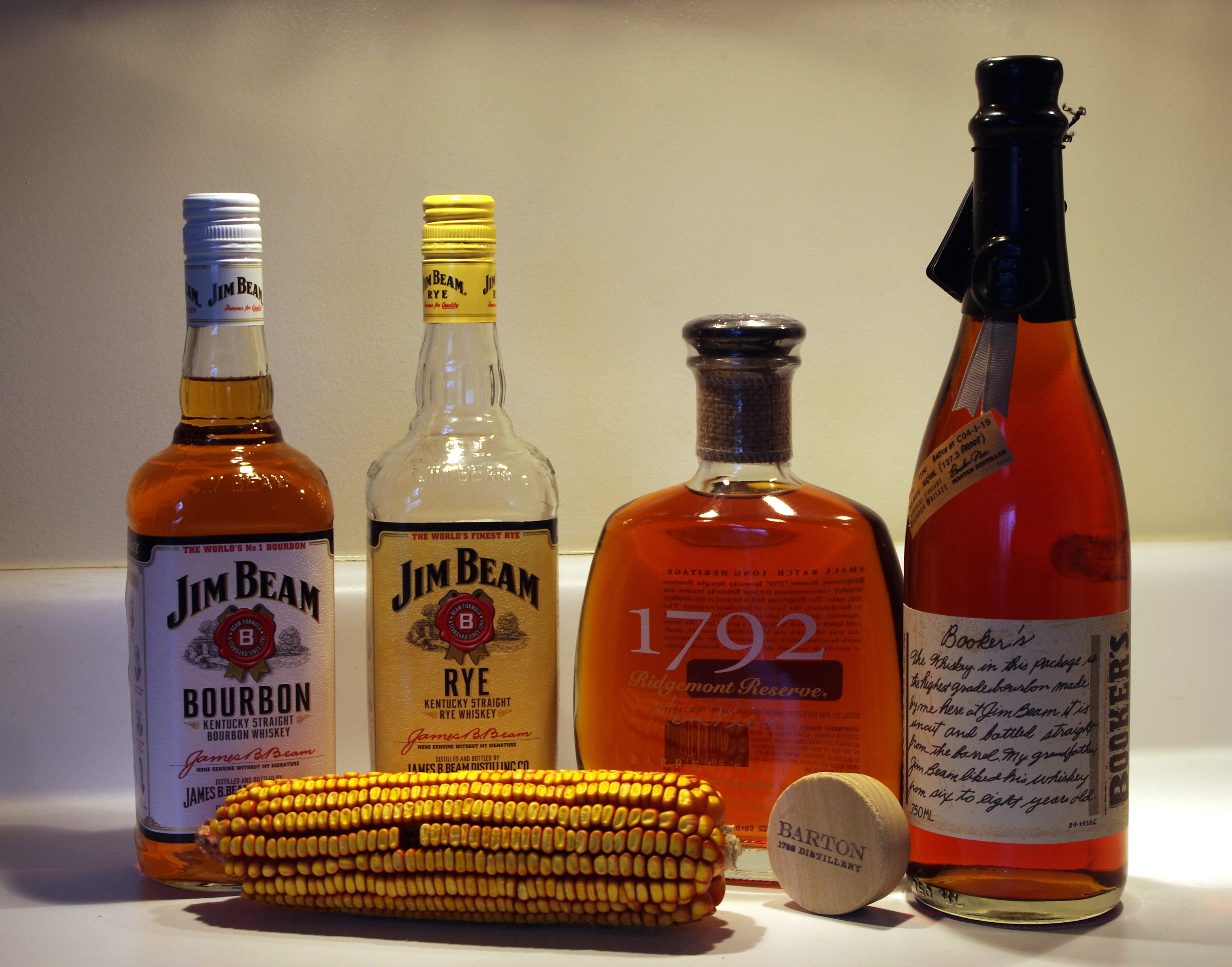
The Short Answer
All bourbon is whiskey. But not all whiskey is bourbon.
Whiskey is the broad category — a grain-based distilled spirit aged in wood, made all over the world. Bourbon is a specific American version of whiskey, legally defined by federal law, with a strict set of production requirements that set it apart from every other style on the shelf.
The comparison gets confusing because bourbon sits inside the whiskey category rather than alongside it. Think of it like squares and rectangles: every square is a rectangle, but not every rectangle is a square. Bourbon is the square.
Difference 1: Where It Is Made
Bourbon must be produced in the United States. Not just in Kentucky — anywhere in the country. The federal law that established bourbon as a "distinctive product of the United States" in 1964 requires only that the spirit be made on American soil.
Scotch must come from Scotland. Irish whiskey from Ireland or Northern Ireland. Japanese whisky from Japan. These geographic designations are absolute — you cannot legally call a spirit "Scotch" if it wasn't made in Scotland.
Bourbon's rule is the same, only the geography is the entire United States. Kentucky produces roughly 95% of the world's supply, which is why the two names are so closely associated — but a distillery in Texas, New York, or Colorado making whiskey to bourbon's exact specifications can legally call it bourbon.
Difference 2: The Grain Recipe
Bourbon must be made from a grain mixture (called a "mash bill") that is at least 51% corn. This corn-dominant base is the single biggest reason bourbon tastes the way it does — sweeter, fuller, and more rounded than most other whiskeys.
No other whiskey category shares this requirement. Scotch is primarily malted barley. Irish whiskey uses a blend of malted and unmalted barley. Rye whiskey requires at least 51% rye. Each grain base produces a fundamentally different flavor foundation.
In practice, most Kentucky distilleries use 65–75% corn in their mash bills. The remaining grains — typically rye, wheat, or malted barley — are called "flavor grains" and they shape the secondary character of the bourbon. A high-rye mash bill (like Bulleit or Buffalo Trace) produces a drier, spicier spirit. A wheated mash bill (like Maker's Mark or Pappy Van Winkle) produces a softer, more approachable pour.
Difference 3: The Barrel
This is the most consequential difference — and the one most people don't know about.
Bourbon must be aged in brand-new, charred white oak containers. Every single batch, every single time. No exceptions.
Other whiskeys have no such requirement. Scotch is almost always aged in used barrels — and the most common source of those used barrels is bourbon distilleries. Scotch producers buy spent bourbon barrels by the thousands because the previous bourbon aging has softened the oak's tannins while leaving behind vanilla and caramel compounds that carry over into the Scotch. The bourbon producer cannot reuse those barrels for a second batch of bourbon.
The char level on the inside of the barrel — rated 1 through 4, with 4 being the heaviest burn — creates a layer of caramelized wood sugars that the spirit passes through during aging. This is the primary source of bourbon's characteristic vanilla, caramel, and toffee flavors. New oak with heavy char, years of Kentucky heat pulling the spirit in and out of the wood — that's where bourbon's flavor comes from.
Difference 4: No Additives Permitted
Nothing can be added to bourbon at bottling except water. No caramel coloring, no flavoring compounds, no sweeteners. The color in the glass and the flavor in the bottle must come entirely from the grain and the barrel. That's it.
This is one of the strictest rules in the whiskey world. Scotch permits the addition of plain caramel coloring (E150a) to ensure visual consistency across batches. Many other whiskey categories permit flavoring additions or blending with neutral grain spirit.
Bourbon does not. When you pour a bourbon that looks dark amber in the glass, that color came from years in a charred oak barrel — not a colorant. When you taste vanilla and caramel, those compounds were extracted from the wood. The purity requirement is absolute, and it's one of the most meaningful differentiators between bourbon and every other whiskey style.
Difference 5: The Distillation and Proof Rules
Bourbon has two proof-related requirements that shape its character in ways most drinkers never think about.
First, it must be distilled to no more than 160 proof (80% ABV) off the still. Higher distillation proof strips out more flavor congeners from the grain. The 160 proof ceiling preserves more grain character in the final spirit than you'd find in, say, a vodka-style distillation running at 190+ proof.
Second, the new spirit must enter the barrel at no more than 125 proof (62.5% ABV). The barrel entry proof matters because higher proof spirits interact with oak differently — extracting flavor compounds at different rates and in different proportions. The 125 proof ceiling ensures the spirit isn't so concentrated that it overwhelms the wood interaction.
Together, these rules create a tighter production window than most other whiskey categories face, and they contribute meaningfully to bourbon's consistently bold, grain-forward character.
What About Tennessee Whiskey?
Tennessee whiskey — most famously Jack Daniel's — sits in an interesting category. It meets most of bourbon's legal requirements, including the 51% corn mash bill, new charred oak barrels, and the no-additives rule. But it goes through one additional step called the Lincoln County Process: filtering the new spirit through sugar maple charcoal before it enters the barrel.
That extra step takes it outside the bourbon category. Not because the law explicitly forbids it, but because Tennessee distillers have successfully lobbied for their own classification. Jack Daniel's is Tennessee Whiskey, not bourbon — and they prefer it that way.
The Whiskey World in Summary
Here is the simplest way to understand the global whiskey family:
• Whiskey is the parent category — fermented grain, distilled, aged in wood. Every bourbon, Scotch, Irish whiskey, rye, and Tennessee whiskey is a whiskey.
• Bourbon is one specific branch — American, corn-dominant, new charred oak, no additives, produced within strict proof limits.
The rules that define bourbon are among the most demanding of any whiskey category in the world. That's not a limitation — it's the source of bourbon's consistency and character. Every bottle labeled bourbon in the United States cleared the same legal bar.
The best way to understand the difference between bourbon and everything else? Taste both, back to back, in the place where bourbon was born. Kentucky's distilleries aren't just production facilities — they're the living argument for why these rules produce something worth protecting.

About the Author
Joey Myers

More Posts from the Bourbon Blog

